Direct Democracy Global Network
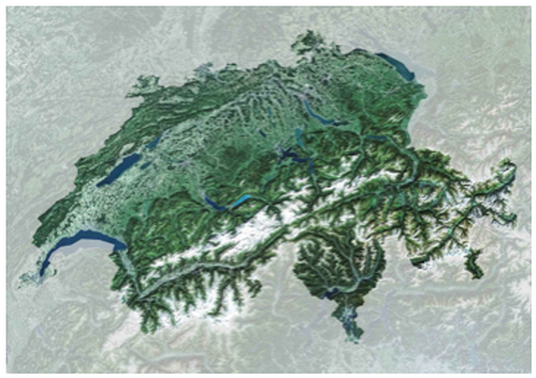
Switzerland Direct Democracy Story
The stories and legends describing Switzerland's historic direct democracy have inspired me throughout my life. In order to share with my readers here, I recently conducted an online search posing several key questions:
1. What are the historic Alpine roots of Switzerland's direct democracy form of government that accorded Swiss citizens political sovereignty?
2. Why and how did Switzerland's unique constitution legalize direct democracy principles and practices, including referendums and initiatives?
3. What role was played by Geneva's world-renowned political philosopher, Jean-Jacques Rousseau, who audaciously advocated popular sovereignty in the middle of the 18th century, before the Declaration of Independence was written?
I quote below the responses I received.
"Switzerland’s direct democracy is rooted in a centuries-old history of communal self-governance, and it remains uniquely integrated into its federal constitution due to a deliberate historical evolution designed to manage extreme linguistic, cultural, and geographic diversity through consensus.
"While other countries utilize direct democracy instruments (such as sporadic referendums), Switzerland is unique because it is the only nation where popular rights are routinely used, constitutionally prescribed at the federal level, and act as a permanent counter-weight to the parliament.
"Historical Roots of Swiss Direct Democracy
"The system grew out of decentralized, rural traditions and 19th-century liberal reforms:
• Medieval Alliances and Communal Assemblies: In 1291, three Alpine cantons formed the Old Swiss Confederacy to protect their autonomy. In these isolated rural regions, citizens managed local resources through communal assemblies. This gave rise to the Landsgemeinde (open-air citizen assemblies), a tradition dating back to the late Middle Ages where citizens voted on laws by a show of hands. It is still practiced today in cantons like Glarus and Appenzell Innerrhoden.
• The Cooperative Principle: Swiss governance developed on the principle of the Genossenschaft (cooperative). This prioritized collective responsibility, local self-determination, and the philosophy that sovereignty belongs to the community rather than a central monarch.
• 19th-Century Rural Uprisings: When the modern Swiss federal state was founded in 1848, it originally relied on a purely representative system. However, rural grassroots movements and democratic revolutions in the 1860s pushed back against the ruling urban elites. This pressure led to constitutional revisions that legally institutionalized direct popular power.
• Gradual Constitutional Codification: Rather than a sudden shift, the tools of direct democracy were added to the Swiss Federal Constitution incrementally:
1848: Mandatory referendums for total constitutional revisions were introduced.
1874: The optional referendum was established, allowing citizens to veto laws passed by parliament.
1891: The popular initiative was introduced, letting citizens propose specific constitutional amendments.
"Why Switzerland is Unique
"Switzerland is the only nation completely organized around federal direct democracy due to several distinct political and structural factors:
• A Tool for Managing Diversity: Switzerland lacks a unifying national language, religion, or ethnicity. Direct democracy serves as a vital tool for conflict resolution. Instead of a "winner-take-all" representative system that could marginalize minority groups, direct democracy forces a "concordance system". Parliament must build broad consensus on laws to prevent citizens from blocking them via an optional referendum.
• The Principle of Subsidiarity: Power is explicitly decentralized across three tiers: the federal government, 26 cantons, and over 2,000 municipalities. The Swiss Federal Government only handles tasks that local communities cannot manage themselves. This structural commitment to localism keeps the legislative process physically and conceptually close to the voter.
• Absence of a Strong Central Executive: Unlike presidential republics, Switzerland is led by the Federal Council, a seven-member executive committee where the presidency rotates annually and holds no veto power. Because the executive branch is intentionally weak, the ultimate veto power is held directly by the electorate.
• Lack of Constitutional Judicial Review: Unlike the United States or Germany, Switzerland does not have a supreme constitutional court that can strike down federal laws or popular initiatives for violating the constitution. Once an initiative gathers enough signatures and passes a popular vote, it is integrated into the constitution, establishing the citizens as the absolute sovereign authority.
The Swiss government's e-newspaper, SwissInfo.com, describes How Swiss direct democracy works, as follows:
"In 1918, a popular initiative altered Switzerland’s electoral system by establishing proportional representation in most cantons. This means that if a political party receives 30% of the votes in a canton with ten seats in the House of Representatives, it is entitled to three of those ten seats.
"The popular initiative or people’s initiative gives Swiss citizens the opportunity to propose changes to the Constitution. They can initiate a vote by collecting and verifying at least 100,000 signatures from eligible voters within 18 months.
"Another form of voting is the mandatory referendum which must be held if the government and parliament seek to amend the constitution or join international organisations such as the European Union or NATO.
"The optional referendum, on the other hand, can be initiated by a citizens’ committee opposing a law adopted by the government and parliament. Citizens can challenge this law by collecting at least 50,000 valid signatures within 100 days to launch a referendum.
As reported in Wikipedia, the Federal Council is the federal cabinet of the Swiss Confederation. Its seven members also serve as the collective head of state and government of Switzerland. Since World War II, the Federal Council is by convention a permanent grand coalition government composed of representatives of the country's major parties and language regions.
While the entire Federal Council is responsible for leading the federal administration of Switzerland, each Councillor heads one of the seven federal executive departments. The president of the Swiss Confederation chairs the council, but exercises no particular authority; rather, the position is one of a first among equals and rotates among the seven Councillors annually.
The Federal Council is elected as a body by the 246 members of the Federal Assembly of Switzerland for a term of four years after each federal parliamentary election, without the possibility of recall or a vote of no confidence. Incumbents are not term-limited and are by convention almost always re-elected; most serve around 8 to 12 years in office.
Swiss Popular Political Sovereignty
Outside the region that eventually coalesced into the nation-state Switzerland, in earlier centuries, neighboring France and the Austrian Hapsburg dynasty were rife with internal and external conflicts and attacks. But one notable exception within the region were people living high in the mountains who co-operated to build peaceful, agrarian communities. They were well-armed and capable of fending off external attackers.

As early as 1291, fiercely independent and autonomous farmers and peasants living high in the Swiss mountain ranges banded together to provide each other mutual aid and protection against foreign invaders. They were strong and well-armed, and included the legendary William Tell.
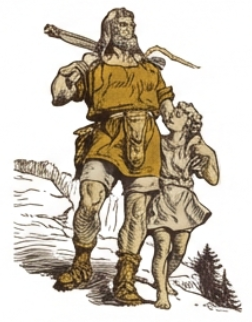
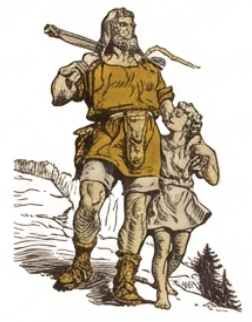
Tell was "an expert mountain climber and marksman with a crossbow", who is credited with slaying a tyrannical Austrian duke. According to the legend,
"Tell's defiance and tyrannicide encouraged the population to open rebellion and a pact against the foreign rulers with neighbouring Schwyz and Unterwalden, marking the foundation of the Swiss Confederacy. Tell was considered the father of the Swiss Confederacy."
Due to the successes of these early inhabitants of Switzerland in repelling external attackers, more and more of their neighbors in nearby regions joined their mutual aid alliance. (See How was Switzerland Formed? The History of Switzerland. Knowledgia YouTube.)
As the formal structure of the nation took shape, governing laws were written. They included self-governing laws inserted into the country’s evolving federal structure by Swiss people living at the grassroots in “communes” and “cantons”. Among the fundamental laws inserted into the constitution, creating a “direct democracy” form of government, are "initiatives" that empower citizens to directly propose laws to lawmakers, and "referendums" that empower citizens to directly mandate amendments and revocation of existing laws. These actions are legitimized by nationwide votes by Swiss citizens to accept or reject specific proposals formulated by Swiss citizens, which mandate implementing actions by federal lawmakers.
What is most impressive in the evolution of the Swiss nation-state is that the people living at the grassroots succeeded in maintaining their autonomy and authority to launch and vote in initiatives and referendums during the several centuries when Switzerland’s statehood was being formalized.
Eventually, a bicameral federal legislature was created, with the lower level comprised of lawmakers representing the population, and the upper level comprised of lawmakers representing the cantons, all subject to implementing the results of referendums and initiatives. Wisely and presciently, rules have been made to prevent any elected lawmaker from serving more than one-year term as president, and prevent any of the multiple Swiss political parties from placing one of their elected lawmakers in the presidency for more than one year.
An important consequence of Switzerland's historic "direct democracy" roots, and evolution into a formal nation-state, is the emergence of political and cultural norms that favor compromise and consensus building to reconcile divergent views. The emergence of these norms was motivated in all likelihood by common recognition of the need to reconcile the internal diversity existing within Switzerland, reflected in distinct, geographically-based cultures; four different languages; and two major religions.
In the early years of forming the Swiss Confederation, the Swiss people most likely agreed that in order to unite internally to build a common front to repel external adversaries, their survival might well depend on their ability to reconcile diversity and avoid being internally divided by domestic quarrels and conflicts. A small country like Switzerland, existing in environments dominated by far larger, well-armed, and often aggressive countries, needed to be as free as possible of internal confrontations in order to circumvent external confrontations with foreign countries. On many occasions in the early days of its existence, what saved the day were the high Swiss mountain ranges which few foreigners could climb better or faster than the Swiss themselves.
What is also salient is about the pervasive, long-standing consensus-building norms is that Swiss federal lawmakers strive to avoid provoking Swiss citizens into launching and passing initiatives and referendums mandating federal lawmakers to change what they have done, or are planning to do. In effect, these fundamental rights, which that empower Swiss citizens at the grassroots possess to decide what laws are passed, revoked, or amended, are reported to exercise an inhibitory influence on lawmaking at the federal level.
Significant benefits of Switzerland's accrued from its internal and external circumstances and environments, however. One such benefit, dating back to the early 1800s, is Switzerland's decision to declare its political neutrality and refusal to take sides in external conflicts. This neutrality has contributed to internal and external stability. In contrast to countries where internal and external conflicts are endemic, and political violence is frequent, the politically neutral, consensus-building Switzerland is internally peaceful, by comparison, and can play a uniquely helpful international role as conflict mediator and peace builder.
In addition, the country has become the home of numerous humanitarian organizations, such as the International Committee of the Red Cross, and as one of the four major offices of the United Nations. In the difficult times characterizing the first two decades of the 21st century, Switzerland can also serve as an encouraging role model illustrating ways and means to use "direct democracy" to reverse the global decline of democracy.
Although Rousseau urged European countries whose governments were in formation to adopt Switzerland’s model of popular sovereignty based on “direct democracy” model, it was fully functioning and vibrant only in Switzerland.
Nor was it emulated by the founders of the American republic when they devised new institutions and processes, and ratified the constitution in 1776. In fact, the founders incorporated fundamentally undemocratic features limiting the scope of citizen’s rights, such as the Electoral College and the U.S. Senate
The consequences of hobbled democratic institutions and processes are dire when judged by the precipitous decline of democratic institutions and processes worldwide, not merely in the US and Europe. Increasing ways and means are being devised and implemented, legally and illegally, by politicians, political parties, and special interests, to restrict citizens’ and voters’ control of elections. They prevent citizens and voters from duly registering to vote, choosing candidates, setting platforms and legislative agendas, casting ballots, and having their ballots accurately counted.
One consequence are widening gaps between the needs, priorities, and demands of people at the grassroots, on the one hand, and those of lawmakers who enact legislation, on the other hand. In my view, these retrograde developments indicate traditional democratic institutions and processes are failinh to withstand the tests of time. Demands for reform are of scant avail, because effective internal reform mechanisms are ineffective and inaccessible. Consequently, it is my view that these institutions and processes must be re-invented externally — to protect individual liberty and popular sovereignty, as defined by Rousseau, and incorporate the basis premises and tenets of “direct democracy”.
To do so, voters must be able to circumvent anti-democratic and un-democratic laws and decisions that have been enacted, by using the advanced technologies that have been developed to support these rights and expand opportunities to exercise them. The Direct Democracy Global Network incorporates these technological advances and combines them with the prescriptions provided by Rousseau and the Swiss model of popular sovereignty and direct democracy.
Life and Times of Geneva's Jean-Jacques Rousseau

Portrait by Maurice Quentin de La Tour, 1753
As a citizen of Switzerland and the US, since my student days in both countries, I've long been fascinated by Geneva's world renowned philosopher Jean-Jacque Rousseau.
I even consider him prophetic in his observations and foresight into how societies should organize themselves so that ordinary people could live the lives they choose, and collectively decide how they want to govern their communities.
He was critical of both the aristocracy in Geneva and the growing "bourgeoisie" -- the social class owning capital, property, and the means of production, historically associated with the middle-to-upper classes. He was unequivocal in railing against the inequities that were emerging. I have read that his views were championed by the perpetrators of the French Revolution.
Rousseau is described in a British documentary as "a man who could quite reasonably be the most influential man to have ever lived" -- How Switzerland Changed the World.
Rousseau's warnings and doctrines, however, have been largely ignored, especially those defining political sovereignty, the basis of the Swiss political system, which is a citizen-controlled direct democracy.
Nonetheless, many of his warnings and doctrines were favored and applauded by prominent Americans in the 18th, 19th, and 20th centuries, who echoed and advocated them, including Benjamin Franklin and Franklin Delano Roosevelt, the 32nd US President, who wrote the following:
"Let us never forget that government is ourselves and not an alien power over us. The ultimate rulers of our democracy are not a President and senators and congressmen and government officials, but the voters of this country." US President Franklin D. Roosevelt, Address at Marietta, Ohio, 1938.
Professionally and personally, Rousseau was a major inspiration for my work in founding the Direct Democracy Global Network. This three minute video describes it.
By way of a brief summary, Rousseau dedicated most of his life arguing vigorously in favor of the primacy of individual liberty, citizens’ sole power to determine the "the general will, and their irrevocable control of governing bodies. Simultaneously, he refuted vigorously the views of wealthy "patrician" families, aristocrats of assorted lineage, and even monarchists defending the French monarchy. In his native Geneva, they fought unceasingly to assert control of governing bodies, and use them to levy taxes on all inhabitants -- and ban Rousseau and his works!
Rousseau’s unique and expansive ideas about individual liberty were well-known in the 18th century. His doctrines advocating self-government were also well-known, especially his insistence that government officials are “servants” of the people. He authored the famous Social Contract in which he provided a multi-faceted rationale and numerous prescriptions for building political institutions capable of empowering individuals to use government to protect their liberty. Given the simultaneous emergence of Switzerland’s popular sovereignty doctrines and direct democracy principles, he urged European countries to emulate them.
Although Rousseau’s life was caught up in turbulent cultural, economic, and political upheavals inside and outside his native city, his writings displayed dogged determination to make sense of these upheavals, as Swedish historian and American university scholar Helena Rosenblatt writes in Rousseau and Geneva: From the First Discourse to The Social Contract, 1749–1762.
As a consequence, Rousseau’s views were controversial during and after his lifetime. Although he is regarded as one of the world’s most influential thinkers and authors, the following critique was written by historians Will and Ariel Durant in Rousseau and Revolution (1967):
“How did it come about that a man born poor, losing his mother at birth and soon deserted by his father, afflicted with a painful and humiliating disease, left to wander for twelve years among alien cities and conflicting faiths, repudiated by society and civilization, repudiating Voltaire, Diderot, the Encyclopédie and the Age of Reason, driven from place to place as a dangerous rebel, suspected of crime and insanity . . . how did it come about that this man, after his death, triumphed over Voltaire, revived religion, transformed education, elevated the morals of France, inspired the Romantic movement and the French Revolution, influenced . . . the socialism of Marx, the ethics of Tolstoy and, altogether, had more effect upon posterity than any other writer or thinker of that eighteenth century?"
He pursued this avocation even when his idiosyncratic formulations for reversing growing inequality evoked criticism from wealthy patricians and aristocratic proponents of social, political, and economic hierarchies. At that time, Geneva was largely governed by an oligarchy comprised of wealthy families whose control of governing institutions enabled them to levy and collect taxes from all families and individuals. The population at large considered their tax levies unfair, as was their undemocratic control of the governing institutions that enabled them to decide these and related matters.
And while he read widely and familiarized himself with the renowned authors of his time, and met many of them in his travels, especially to Paris, his eclectic views were idiosyncratic and non-conformist. He opposed the censorship of intellectuals’ views and writings by members of both patrician families and aristocrats in Geneva. In retaliation, they frequently banned works and authors, who could be beaten, and even killed if they deviated from orthodoxy.
Nonetheless, even though Rousseau could mince words if necessary to propagate this views and avoid censorship, he rarely went out of his way to conform, even though he often found himself unwelcome in many places throughout his life. On occasion, Rousseau did try to immerse himself into other ways of thinking aligned with more patriarchal and aristocratic views.
They included those espoused by prominent French intellectual Voltaire and prominent partisans in nearby France, which was ruled by an oppressive monarchy ended by a revolution lasting from 1789 -1799. But soon thereafter he repudiated Voltaire and these views, and re-aligned his views with those of the people with whom he grew up in his native city of Geneva, and in surrounding regions that later coalesced into the nation-state of Switzerland.
What is most unique and remarkable about Rousseau is his comprehensive analysis of virtually all types of human interactions, and his delving into history and immersing himself in works written centuries before his time, such as those of the Greek philospher Plutarch His aims included identifying the institutions and processes he considered indispensable to ensuring ordinary people are sovereign decision-makers.
In arguing that lawmakers in government are the servants of the people, he was countering long-standing patriarchal and aristocratic views that were being continually re-affirmed. Undaunted, he painstakingly identified, described, and prescribed specific ways and means by which sovereign citizens can determine the general will, by gathering together to make decisions, voting in elections to decide which "servants" of the people will hold positions in governing institutions.
“Rousseau believed in a legislative process that necessitates the active involvement of every citizen in decision-making through discussion and voting. He coined this process as the “general will”, the collective will of a society as a whole, even if it may not necessarily coincide with the individual desires of each member.” [141] Wikipedia
"Throughout his life he kept returning to the thought that people are good by nature but have been corrupted by society and civilization. He did not mean to suggest that society and civilization are inherently bad but rather that both had taken a wrong direction and become more harmful as they became more sophisticated." Encyclopedia Britannica
Paradoxically, Rousseau signed his original works J.J. Rousseau, Citoyen de Geneve. But later after Geneva elders condemned his books and they were ordered to be destroyed, he renounced his citizenship. Interestingly, he maintained his independent, idiosyncratic views even after they were roundly condemned, and he was declared persona non grata in one place and one country after another. He simply moved on to other less hostile environments where he could find influential people who would take him in and protect him.
What makes Rousseau’s 18th century work especially relevant to the Direct Democracy Global Network in the 21st century is its emphasis on the source of political liberty — people’s rights at birth, and the institutions and processes needed for them to exercise it -- not on constitutions, laws, court decisions, cultural mores, etc.
What he railed against were the external forces and factors that obstructed this exercise, and limited the possibilities for people to live their lives in their own way, as part of self-defining and self-determining communities -- a far cry from modern political parties with pre-set priorities and candidates determined by top officials.
Fortunately, and in stark contrast, Yale University Professor Steven Smith focuses on Rousseau's world-changing philosophy and treatises, and shares them with his students in the lectures below, accessible via YouTube videotapes:
18. Democracy and Participation: Rousseau's Discourse
19. Democracy and Participation: Rousseau’s Discourse
20. Democracy and Participation: Rousseau's Social Contract, I-II
Professor Smith views Rousseau's identification of the general will as the indispensable and core precept of civilized society.
It serves as a collective answer to how humans can secure individual liberty without lapsing into anarchy.
According to Smith, Rousseau redefines freedom not as the absence of law (like Hobbes or Locke), but as "moral freedom"—the freedom that comes from actively participating in making the laws that you choose to obey.
Direct Democracy Global Network
Contact
century21@reinventdemocracy.net